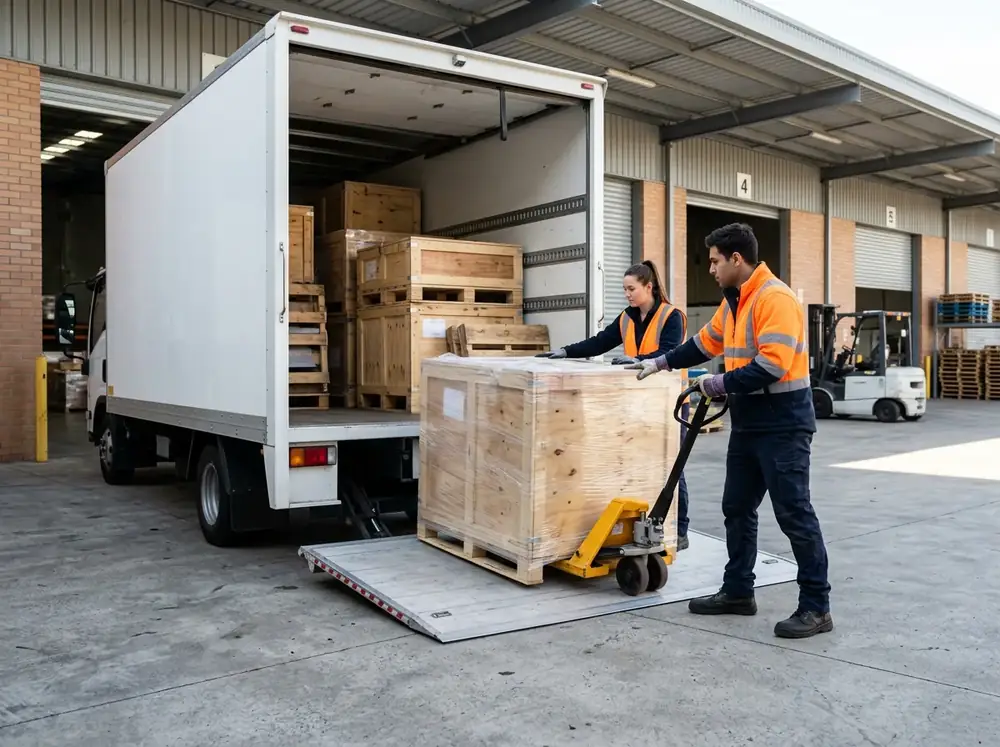
In freight, goods are rarely moved one box at a time. They are stacked on pallets or packed in crates so that forklifts can handle them, and so they survive weeks of loading, stacking and vibration. Good preparation protects the goods, speeds up handling and keeps the price predictable.
Pallet sizes
- North America: the standard pallet is 48 × 40 inches (about 122 × 102 cm).
- Europe: the EUR pallet is 1200 × 800 mm; a 1200 × 1000 mm size is also common.
Either can be shipped internationally. What matters is that the load fits the pallet and the pallet is in good condition, with no broken boards.
Building a stable pallet
- Heaviest items at the bottom, lighter ones on top.
- Stay within the footprint. Cartons hanging over the edge get crushed and can tip the load.
- Stack cartons in columns for maximum strength, or interlock them for stability, depending on the cartons.
- Keep the top flat if the pallet may be stacked; mark it "do not stack" if it cannot bear weight.
- Secure the load with stretch wrap, including a few turns around the pallet itself, and straps for heavy items.
- Use corner boards to protect edges and spread strap pressure.
When to use a crate
A wooden crate gives full protection on all sides. Use one for:
- Fragile goods: glass, stone, ceramics, mirrors, artwork
- Machinery with exposed parts
- High-value items, antiques and furniture with delicate finishes
- Irregular shapes that cannot be stacked safely on a pallet
Inside the crate, block and brace the item so it cannot move, and add padding at contact points.
ISPM 15: the wood packaging rule
Most countries, including the United States, require solid wood packaging (pallets, crates, dunnage) to be treated against pests under the international standard ISPM 15. Treated wood carries a stamp with the IPPC logo, the country code, the producer's number and the treatment type (HT for heat treatment, MB for methyl bromide fumigation).
Untreated or unmarked wood packaging can be refused, treated at the importer's expense, or sent back. Buy certified pallets and crates, or use packaging that is exempt, such as plywood, particle board or plastic pallets.
Protecting against moisture
Containers crossing the ocean go through temperature changes that cause condensation. For goods sensitive to humidity (wood furniture, electronics, metal parts), wrap them in plastic, add desiccant bags, and avoid packing goods that are already damp.
Labeling
- A shipping label on at least two sides of each pallet or crate, with the consignee, address and reference or tracking number
- The number of the piece and the total ("1 of 3")
- Handling marks where needed: fragile, this side up, do not stack
- Remove or cover old labels from reused packaging
Measure after packing
Freight is priced on the size and weight of the packed shipment. Once each pallet or crate is ready, measure its length, width and height (including the pallet itself) and weigh it. Sending these figures with your quote request gives you an accurate price. If the measurements change, the price can change too.
Next steps: prepare the commercial invoice and packing list, and decide between a shared or full container.
This guide is general information, not legal or customs advice. Rules and rates change; check the current requirements for your shipment.